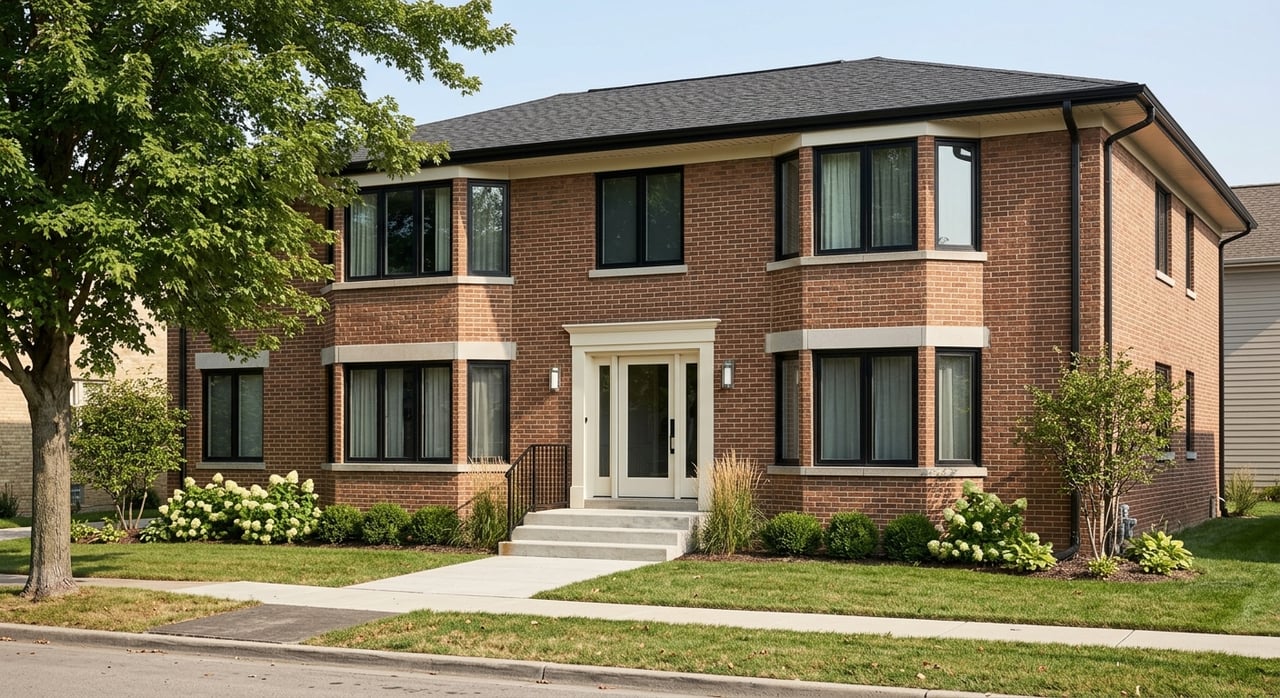
If you are thinking about buying a 2 to 6 unit property in Downers Grove, the opportunity can look strong on paper but fall apart quickly if you skip the right checks. In a mature suburban market, the details matter: zoning, parking, taxes, permits, rents, and financing can all change your numbers. This guide will help you evaluate small multifamily deals in Downers Grove with a practical, investor-minded framework so you can move with more clarity and confidence. Let’s dive in.
Why Downers Grove Gets Investor Attention
Downers Grove is a well-established DuPage County suburb with 50,552 residents based on 2024 Census estimates. It also has a 75.3% owner-occupied housing rate, a median gross rent of $1,589, and a median owner-occupied home value of $439,000, according to the U.S. Census QuickFacts for Downers Grove.
For you as an investor, that points to a market that may feel stable, but not necessarily forgiving. In a community where many households own rather than rent, a small multifamily building may need to compete on condition, layout, parking, and convenience, not just price.
Start With Zoning First
Before you underwrite rent bumps or renovation upside, confirm what the property is legally allowed to be. The Village of Downers Grove’s municipal code shows that two-unit houses and apartment or condo uses are not allowed by right in every zoning district.
That matters if you are looking at a duplex conversion, unit-count increase, or larger repositioning plan. A deal only works if the current use is legal and your future plan fits the parcel’s zoning.
Check Use Before Design Plans
If a project needs a variation or exception, the village’s Planning and Zoning Commission hears those requests. In practical terms, that means zoning review should happen early, before you spend time or money on detailed renovation plans.
This is especially important for investors who see underused space and assume it can become another unit. In Downers Grove, that assumption needs to be verified.
Parking Can Make or Break Feasibility
Parking is one of the most overlooked parts of a small multifamily deal. In Downers Grove, the zoning text shows 2 spaces per dwelling unit for general household living, while apartment or condo uses in the DB or DC downtown districts may require 1.4 spaces per unit, based on the village’s zoning ordinance text amendment document.
If your investment strategy depends on adding bedrooms or increasing unit count, parking needs to be part of the math from day one. A strong interior renovation does not solve a site that cannot support the required number of spaces.
Do Not Rely on Street Parking
It is also important not to treat street parking as your fallback plan. The village notes on its parking page that overnight street parking is prohibited from 2 a.m. to 6 a.m.
For tenants, reliable off-street parking may affect rentability and lease appeal. For you, it can affect whether the property layout truly works as an income-producing asset.
Underwrite Rents at the Unit Level
One of the biggest mistakes investors make is using broad market rent assumptions instead of property-specific rent comps. In a 2 to 6 unit building, your numbers should be based on units that closely match the subject in:
- Bedroom and bathroom count
- Interior condition
- Parking availability
- Laundry setup
- Utility split
- Lease structure
- Layout efficiency
The Census figure of $1,589 median gross rent is useful as market context, but it is not a substitute for current unit-level analysis. In Downers Grove, parking and functional layouts may justify a rent premium just as much as updated finishes.
Model Expenses With Discipline
Small multifamily investing is often won or lost on expense assumptions. If you are too aggressive on rents and too light on repairs, taxes, or compliance costs, the return can look better than reality.
Common expense categories to underwrite include:
- Property taxes
- Insurance
- Owner-paid utilities
- Repairs and maintenance
- Lawn care or snow removal
- Capital reserves
- Leasing and turnover costs
- Property management
- Vacancy or credit loss
- Legal and compliance costs
Illinois guidance also makes clear that landlords must keep units fit to live in, make necessary repairs, and comply with applicable codes, according to the Illinois Attorney General landlord and tenant guidance. That means maintenance reserves are not optional if you want a realistic operating budget.
Verify Taxes by PIN
For taxes, do not rely on an old listing number if you are making a serious investment decision. Use the parcel record for the exact property through the DuPage County property lookup system.
Tax history can materially affect your cash flow, especially in a suburb where purchase prices may already compress your yield. Exact numbers matter here.
Understand 2 to 4 Units vs. 5 to 6 Units
Financing changes meaningfully once you cross certain unit-count thresholds. According to Freddie Mac’s LTV guidelines, some owner-occupied 2-unit and 3 to 4 unit purchases may qualify for high loan-to-value residential-style financing, while 2 to 4 unit investment properties are capped at 75% LTV.
That is a major distinction for house hackers and investors alike. A 2, 3, or 4 unit property may fit one financing path, while a 5 or 6 unit building may require more business-purpose or commercial-style analysis.
Why Unit Count Matters So Much
The financing question is not just about price. It affects your down payment, reserves, lender options, underwriting standards, and exit strategy.
If you plan to occupy one unit, the lending structure may look very different than it would for a non-owner-occupied purchase. This is one reason I encourage investors to define the operating plan early, not after the offer is accepted.
Value-Add Works Best With a Clear Scope
Many Downers Grove 2 to 6 unit opportunities will involve some level of improvement. Cosmetic updates like flooring, paint, cabinets, appliances, fixtures, bathroom refreshes, and cleaner common areas can improve appeal and support stronger rents.
But if your scope includes moving walls, changing egress, updating plumbing or electrical systems, or reworking parking, assume permit review will be part of the process. The village’s permits page notes that most projects require a permit, applications are submitted online, and inspections may be required.
Older Buildings Need Extra Care
If the property was built before 1978, lead-based paint rules become part of your diligence. The EPA states that sellers and landlords must disclose known lead-based paint hazards before a sale or lease becomes enforceable, and renovations that disturb lead paint in pre-1978 housing must follow lead-safe practices under its lead disclosure guidance.
For older small multifamily assets, this can affect both renovation cost and project timing. It is one more reason to build your budget carefully instead of treating rehab as a simple cosmetic exercise.
Review Lease and Deposit Rules Early
Once a property is under contract, many investors focus only on units, rents, and deferred maintenance. That is important, but legal compliance around leases and deposits also deserves attention.
Illinois law requires an itemized damage statement and receipts within 30 days if a security deposit is withheld, and full return of the deposit within 45 days if that statement is not provided, based on the relevant Illinois statute.
For many standalone 2 to 6 unit buildings, the Security Deposit Interest Act may not apply in the same way it would for owners with 25 or more units. Still, as your portfolio grows, those rules become more relevant, and legal review becomes even more valuable.
A Smart Downers Grove Buying Sequence
If you want a practical framework, here is the order I recommend:
- Verify zoning and legal use for the exact parcel.
- Confirm parking feasibility and site constraints.
- Pull current tax records and operating costs.
- Analyze unit-level rents based on real comparables.
- Review permit needs for any planned improvements.
- Check lead-paint exposure if the building is older.
- Understand financing based on unit count and occupancy plan.
- Review lease and deposit compliance before closing.
This sequence helps you avoid chasing projected upside that may not be legally, physically, or financially realistic.
Why Local Strategy Matters
A 2 to 6 unit property in Downers Grove is not just a spreadsheet exercise. It is a local, parcel-specific investment decision where zoning, parking, rentability, and compliance all connect.
That is why a strategy-led approach matters. When you evaluate these properties with discipline on the front end, you put yourself in a much better position to negotiate well, renovate wisely, and hold an asset that performs the way you expected.
If you are considering a duplex, triplex, four-unit, or small apartment building in Downers Grove, working with a local advisor who understands investor math, property positioning, and due diligence can save you time and costly mistakes. If you want help evaluating opportunities in the western suburbs, connect with Edgar Guerrero for a focused, data-informed conversation.
FAQs
What should you check first when investing in a 2–6 unit property in Downers Grove?
- Start by verifying the property’s zoning and legal use, then confirm parking feasibility before you underwrite renovation upside or projected rents.
How important is parking for Downers Grove multifamily investing?
- Parking is a key diligence item because village standards vary by use and district, and overnight street parking is prohibited from 2 a.m. to 6 a.m.
Are rent estimates for Downers Grove multifamily properties enough by themselves?
- No. You should analyze rents at the unit level using comparable bedroom count, condition, parking, laundry, utility setup, and lease structure.
How do taxes affect a Downers Grove 2–6 unit investment analysis?
- Taxes can significantly impact cash flow, so you should verify the current parcel-specific tax record through DuPage County instead of relying on an old listing figure.
Does financing change between 4-unit and 5-unit properties in Downers Grove?
- Yes. Financing can shift meaningfully based on unit count and whether you will occupy the property, with 5 to 6 unit buildings often requiring a different lending analysis than 2 to 4 unit properties.
What renovation issues matter most for older Downers Grove multifamily buildings?
- Permit requirements, inspections, and possible lead-based paint compliance are major issues, especially if the property was built before 1978.